- What Is a Cable Railing Tensioner & Why Is It Essential?
- Types of Cable Railing Tensioners
- Swage Cable Tensioners
- How Cable Railing Tensioning Hardware Works
- How to Choose the Right Cable Railing Tensioning Hardware
- How to Tension Cable Railing
- Common Cable Tensioning Mistakes to Avoid
- Maintenance Tips for Cable Railing Hardware
- Conclusion
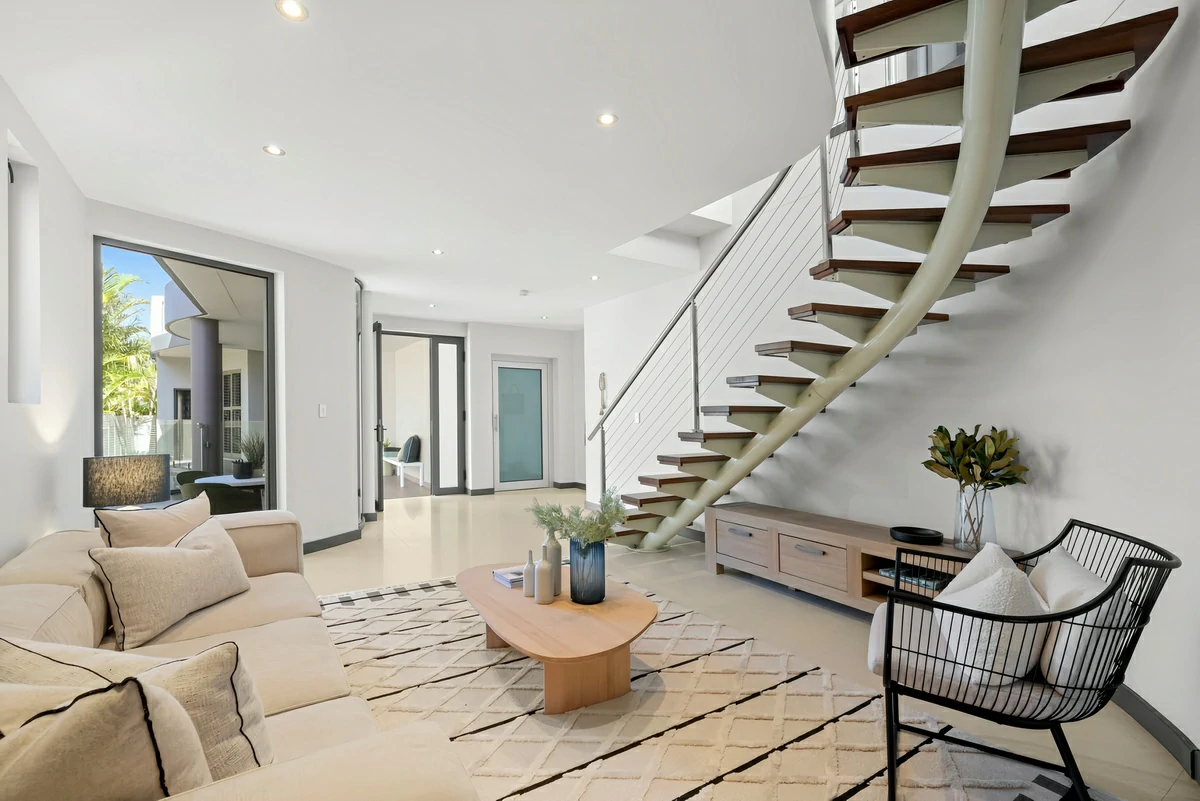
Modern architecture increasingly favors open views and clean lines, making cable railing systems a popular choice for residential decks, balconies, staircases, pool fencing, and commercial buildings. While stainless steel cables create the minimalist appearance, the real performance of the system depends on the hardware hidden behind the design.
Among these components, the cable railing tensioner plays the most critical role. It keeps each cable properly tensioned, minimizes deflection, maintains structural stability, and helps the railing comply with safety requirements. Without reliable tensioning hardware, cables gradually loosen due to temperature changes, structural movement, and everyday use, reducing both appearance and safety.
This guide explains the essential cable railing tensioning hardware used in modern railing systems, compares the different types of cable tensioners, and demonstrates how to tension cable railing correctly. Whether you are an architect, contractor, distributor, or homeowner, this article will help you select the right hardware for long-lasting performance.
What Is a Cable Railing Tensioner & Why Is It Essential?
A cable railing tensioner is a mechanical fitting installed at one or both ends of a stainless steel cable to apply and maintain the correct amount of tension throughout the railing system. By tightening the fitting, installers remove slack from the cable, creating a straight, secure guardrail that complies with building code requirements while maintaining an attractive appearance.
Unlike decorative hardware, a cable railing tensioner is an active structural component. It applies controlled tensile force to the cable, ensuring consistent spacing, reducing cable sag, and maintaining the rigidity of the entire railing system. Properly engineered tensioners also simplify future maintenance by allowing periodic adjustment without replacing the cable.
Proper cable tension serves several important purposes. First, it minimizes cable deflection, preventing excessive movement when pressure is applied. Second, it helps distribute loads evenly across railing posts, reducing stress on individual components. Finally, it maintains the minimalist look that makes cable railing systems so popular in modern architecture.
Without quality tensioning hardware, cables may loosen over time due to temperature changes, structural movement, or normal use. Loose cables not only reduce the aesthetic value of the railing but may also compromise safety. Investing in high-quality stainless steel cable tensioners ensures consistent performance and minimizes future maintenance. Properly installed tensioning hardware ensures that each cable run withstands required lateral loads without excessive deflection, delivering an uncompromising combination of structural safety and refined, unobtrusive design.
Essential Cable Railing Tensioning Hardware & Accessories
A complete cable railing system includes more than just cables and tensioners. Each accessory performs a specific function that contributes to the stability and durability of the finished installation.
Cable Railing Tensioners
Tensioners serve as the active mechanical anchors in a cable run, utilizing internal or external threads to draw the wire rope tight against terminal posts. They allow installers to precisely tighten each cable after installation and make future adjustments if necessary. Most modern tensioners feature threaded designs that provide smooth, controlled tightening while maintaining secure locking under continuous load. Available in a wide variety of configurations—ranging from exposed turnbuckles to fully concealed internal sleeves—these fittings allow installers to fine-tune cable tautness during initial assembly and perform periodic adjustments throughout the system's lifespan.
Cable End Fittings
Cable end fittings connect the cable to the tensioner or terminal hardware. Depending on the installation method, these fittings may be swaged onto the cable using hydraulic tools or utilize swageless technology that requires only simple hand tools. High-quality end fittings ensure maximum holding strength while allowing accurate cable alignment.
Cable Railing Posts
Posts provide the structural framework that supports the entire railing system. Terminal end posts must be engineered to withstand cumulative tension loads from multiple cable lines without bending inward. Because end posts carry the cumulative tension from every cable, they must be considerably stronger than intermediate posts. Stainless steel, aluminum, and timber posts each require dedicated tensioning hardware designed for their specific installation methods. Selecting compatible hardware helps distribute loads efficiently while preventing excessive post deflection or premature hardware failure.
Washers, Nuts and Locking Hardware
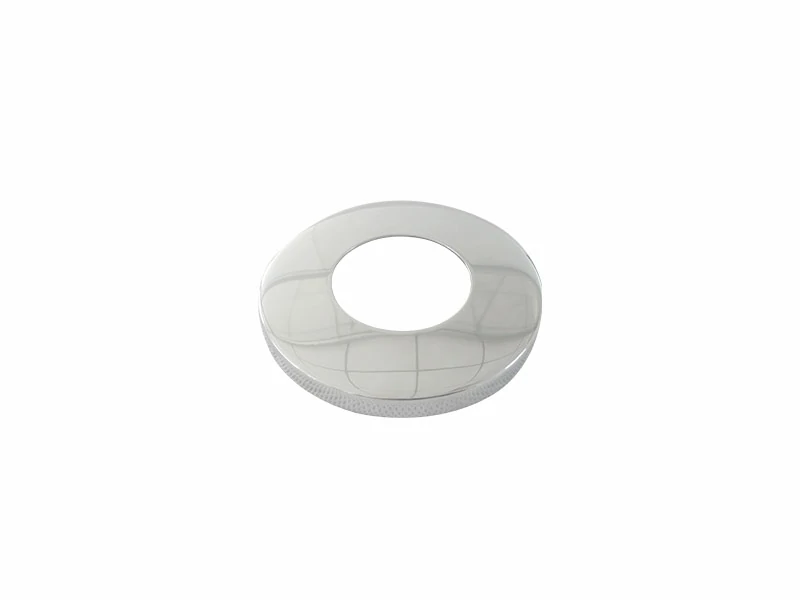
Smaller accessories such as lock nuts, flat washers, decorative covers, and spacer washers play an important role in maintaining long-term stability. Locking hardware prevents fasteners from loosening under vibration, while decorative covers conceal exposed fasteners for a cleaner architectural finish.
Types of Cable Railing Tensioners
Different railing projects require different tensioning solutions. Understanding the advantages of each design helps ensure optimal installation and long-term performance.
Swage Cable Tensioners
Swage cable tensioners connect directly to wire rope using mechanical cold-forming. The cable end is inserted into a hollow metallic sleeve and compressed firmly around the wire using a hydraulic or manual swaging tool. This process creates a seamless, high-strength bond capable of supporting extreme tensile loads, making swaged fittings a standard choice for heavy-duty commercial installations.
Swageless Cable Tensioners
Engineered for fast and convenient field assembly, swageless tensioners eliminate the need for specialized hydraulic crimping machinery. These fittings utilize internal locking jaws or compression wedges that automatically grip the cable as tension increases. Swageless systems are particularly popular for DIY residential projects and remote job sites where transporting heavy swaging equipment is impractical.
Hidden Cable Tensioners
For projects prioritizing ultra-clean, minimalist design, hidden cable tensioners mount completely inside hollow metal or thick wooden end posts. Featuring compact receiver bodies and recessed hex sockets, these internal tensioners leave no exposed bolt heads or turnbuckle barrels visible on the outer post faces, resulting in a sleek, hardware-free exterior appearance.
Adjustable Cable Tensioners
Adjustable tensioners, including classic turnbuckles and articulated stem fittings, feature exposed threaded barrels that provide extended adjustment range. These hardware units offer maximum flexibility for long cable runs where significant cable stretch may occur over time, allowing quick manual adjustments using standard wrenches.
Receiver and Tensioner Kits
Integrated receiver and tensioner kits combine matching end fittings, internal tension studs, and trim caps into unified mounting assemblies. Engineered for precise compatibility, these complete hardware sets simplify purchasing, streamline site installation, and ensure a cohesive visual match across all terminal connection points.
How Cable Railing Tensioning Hardware Works
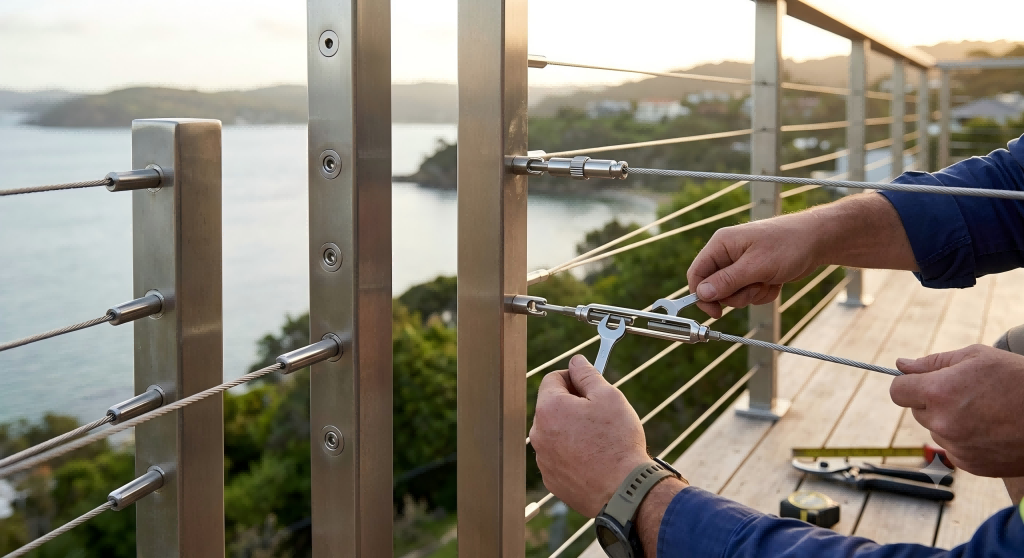
Cable tensioning hardware operates on fundamental mechanical screw principles to convert rotational torque into linear pulling force. When a tensioner barrel or receiver nut is rotated onto a threaded terminal stud, it draws the attached cable further into or against the end post.
As the effective distance between the two terminal fittings shortens, tension increases evenly along the entire wire rope length. The applied tensile force is absorbed by the sturdy terminal end posts, pulling the cable taut across all intermediate pass-through points to establish a rigid, protective barrier.
Because all components work together as an integrated system, compatibility between cables, terminals, posts, and tensioners is essential. Even premium cables cannot perform properly if paired with undersized or poorly manufactured fittings.
How to Choose the Right Cable Railing Tensioning Hardware
Selecting cable railing hardware requires evaluating several technical factors beyond appearance alone.
Based on Post Material
Selecting appropriate hardware requires matching fitting designs to your specific post substrate:
Metal Posts (Steel or Aluminum): Benefit from short, threaded receiver tensioners or blind-fastening studs designed to mount cleanly inside hollow tube walls.
Wood Posts: Require longer threaded shafts or heavy-duty lag screw tensioners that anchor deep into solid timber to distribute load forces without crushing soft wood fibers.
Concrete/Masonry Walls: Depend on heavy-duty expansion anchors or masonry studs engineered for solid substrate fixation.
Based on Installation Type
Installation conditions affect both hardware design and material selection. Level deck railings typically use straight tensioners, while stair railings require articulated or angled fittings that follow the slope without introducing unnecessary stress into the cable. Outdoor decks, coastal balconies, and pool fencing should also use corrosion-resistant materials capable of withstanding moisture, UV exposure, and changing temperatures.
Based on Cable Diameter
Cable tensioning hardware must be precisely matched to the outer diameter of your wire rope. Common residential and commercial architectures utilize either 1/8-inch (3.2 mm) or 3/16-inch (4.8 mm) 1x19 stainless steel wire rope. Using oversized or undersized fittings compromises mechanical grip strength and leads to premature fitting failure under tension.
Based on Installation Method
Swaged fittings offer maximum structural strength and are ideal for large-scale professional projects. Swageless fittings simplify field installation and reduce labor costs. Hidden tensioners provide premium architectural aesthetics, while exposed threaded systems allow easier inspection and future maintenance.
The best choice depends on project budget, appearance requirements, available installation tools, and installer experience.
Material Selection for Long-Term Performance
Material quality has a direct impact on service life, particularly in challenging environments.
304 Stainless Steel
Grade 304 stainless steel performs well in most indoor applications and dry outdoor climates. It provides excellent strength, corrosion resistance, and value, making it suitable for residential staircases, office buildings, shopping centers, and interior balconies.
316 Stainless Steel
AISI 316 stainless steel contains added molybdenum, providing superior resistance against pitting corrosion, industrial pollutants, and harsh weather conditions. It is the architectural industry standard for outdoor decks, exterior balconies, public walkways, and humid environments.
Duplex 2205 Stainless Steel
For projects exposed to seawater, coastal climates, or highly corrosive industrial environments, Duplex 2205 stainless steel provides significantly greater resistance to chloride-induced corrosion than conventional 316 stainless steel. Although it represents a higher initial investment, its exceptional strength and durability make it the preferred choice for premium marine and infrastructure projects.
Surface Finish
Surface finish affects both appearance and maintenance.
Mirror-polished finishes create a bright, reflective appearance commonly specified for luxury residential and commercial architecture. Satin-brushed finishes provide a softer contemporary look while minimizing visible fingerprints and surface scratches. Powder-coated black finishes have also become increasingly popular in modern architectural railing designs.
Selecting a finish that complements the surrounding architecture helps create a cohesive and professional appearance.
How to Tension Cable Railing
Step 1 – Install Posts
Anchor all terminal, corner, and intermediate posts securely to the mounting substrate using structural bolts. Verify that end posts are thoroughly braced and plumb using a level, as terminal posts must withstand significant inward pulling force once cables are tensioned.
Step 2 – Install Cable End Fittings
Mount fixed end fittings on one terminal post and prepare the cable railing tensioner assemblies at the opposite terminal post. Ensure all protective grommets or plastic insert sleeves are pushed into the intermediate post pass-through holes to prevent cable abrasion.
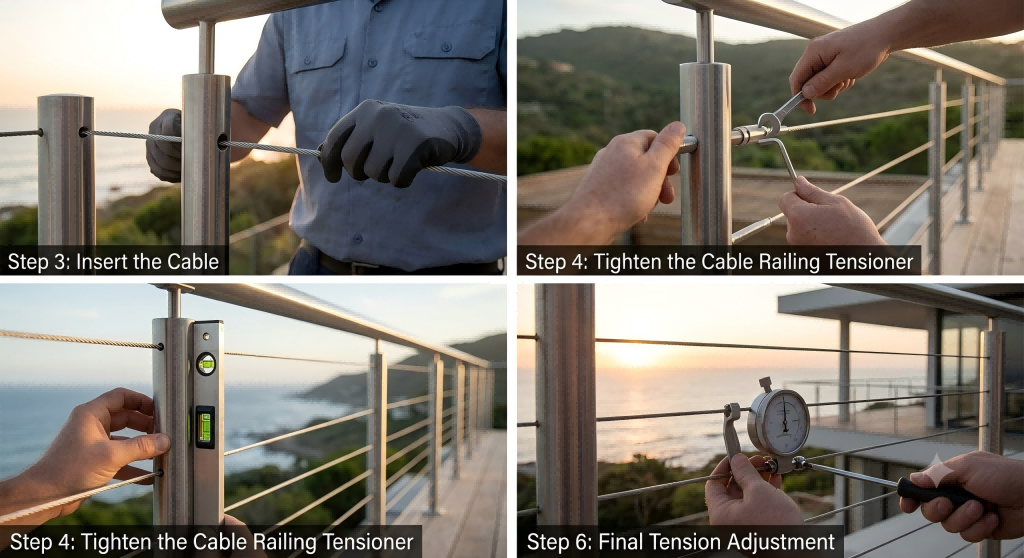
Step 3 – Insert the Cable
Thread the stainless steel wire rope through all intermediate post holes from the fixed end toward the tensioning end. Connect the cable firmly to the fixed fitting, then attach the opposite cable end to the tensioner terminal stud using a swaged or swageless connection mechanism.
Step 4 – Tighten the Cable Railing Tensioner
Engage the tensioner threads by hand to take up initial cable slack across the run. Using appropriate open-end wrenches or hex keys, rotate the tensioner barrel or receiver nut systematically to apply pull force. Ensure threads engage evenly without binding or cross-threading.
Step 5 – Check Cable Alignment
Inspect the cable run visually and check intermediate pass-through points to ensure the wire rope sits centered without binding against post hole edges. Use a level or straight edge to confirm that intermediate posts remain plumb and terminal posts are not deflecting inward excessively.
Step 6 – Final Tension Adjustment
Tension all cables in a systematic sequence—working from the middle cables outward toward the top and bottom lines—to distribute post loads evenly. Verify final tension using a professional cable tension gauge to ensure compliance with local safety standards, then tighten lock nuts or snap on decorative trim covers to complete the installation.
Professional Tip: Avoid fully tightening one cable at a time. Instead, gradually tension each cable in sequence, working from the center outward. This method distributes loads evenly across the end posts and minimizes frame distortion during installation.
Common Cable Tensioning Mistakes to Avoid
- Over-Tensioning Cables: Excessive torque can warp terminal posts, strip tensioner threads, or snap mounting hardware.
- Under-Tensioning Cables: Leaving wire rope too loose allows infill to fail the 4-inch sphere safety test under lateral force.
- Tensioning Cables Out of Sequence: Tightening top-to-bottom instead of middle-outward causes uneven frame twisting and post deflection.
- Omitting Protective Sleeves: Skipping pass-through grommets on intermediate metal posts leads to cable friction, wear, and premature rust staining.
- Mixing Dissimilar Metals: Combining unrated steel hardware with stainless steel cable induces galvanic corrosion that rapidly degrades component strength.
Maintenance Tips for Cable Railing Hardware
To maintain structural safety and visual appeal over time, perform routine inspections of your cable railing hardware every six months:
- Seasonal Tension Checks: Inspect cable tautness in spring and autumn, as seasonal temperature swings cause natural thermal expansion and contraction in metal components.
- Re-tightening Hardware: Use open-end wrenches to take up minor cable slack caused by natural wire settling over extended use.
- Surface Cleaning: Wash stainless steel tensioners and fittings periodically using warm water, mild soap, and a microfiber cloth. Avoid abrasive pads or harsh chlorine-based chemicals that damage the protective chromium oxide surface layer.
- Passivation Treatments: Apply a dedicated stainless steel passivating cleaner or protective marine wax to outdoor fittings to preserve surface lustre and prevent environmental surface staining.
- Promptly replacing damaged or worn hardware ensures the railing continues to perform safely throughout its service life.
Conclusion
A cable railing system is only as reliable as the hardware that holds it together. Choosing the correct cable railing tensioner, matching it with compatible cable railing tensioning hardware, and following proper installation procedures are essential for achieving a railing that is safe, durable, and visually appealing.
From swage and swageless fittings to hidden tensioners and complete receiver kits, every component contributes to the overall strength and appearance of the system. Selecting high-quality stainless steel hardware—whether 304 for interior projects, 316 for outdoor applications, or Duplex 2205 for marine environments—ensures long-term performance with minimal maintenance.
If you're specifying or sourcing cable railing hardware, work with a manufacturer that offers precision-engineered stainless steel tensioners, end fittings, and complete cable railing systems. The right hardware not only simplifies installation but also delivers lasting safety, reliability, and architectural appeal.