
Glass handrail systems are widely used in modern residential, commercial and architectural projects because they combine visual openness with practical safety functions. From frameless glass balustrades to stainless steel handrails with glass infill panels, the performance and appearance of these systems depend heavily on the quality and compatibility of their hardware components.
Glass handrail fittings connect glass panels to supporting structures, secure handrails and provide fixing points for different railing configurations. Common components include glass handrail connectors, brackets, clamps, spigots, standoffs, structural connectors and base channels. Each fitting serves a specific purpose, so selecting compatible components is essential for creating a stable, durable and visually consistent installation.
This guide introduces the common types of glass handrail fittings, explains the materials and finishes used in stainless steel hardware, and outlines how to select suitable components for frameless glass railings and other glass handrail applications.
What Are Glass Handrail Fittings?
Glass handrail fittings are hardware components used to assemble and support railing systems that incorporate glass panels. They connect glass to handrails, posts, walls, floors and other structural elements, forming a complete railing assembly.
Depending on the system design, fittings may hold glass panels directly, support a stainless steel handrail above the glass, connect adjacent glass sections or secure the assembly to a floor or wall. Some systems use visible clamps and brackets, while frameless designs often rely on spigots, standoffs or concealed base channels to achieve a cleaner appearance.
Stainless steel is commonly used for these components because of its strength, corrosion resistance and design flexibility. The appropriate fitting type depends on glass thickness, installation method, structural requirements, environmental exposure and the desired architectural style.
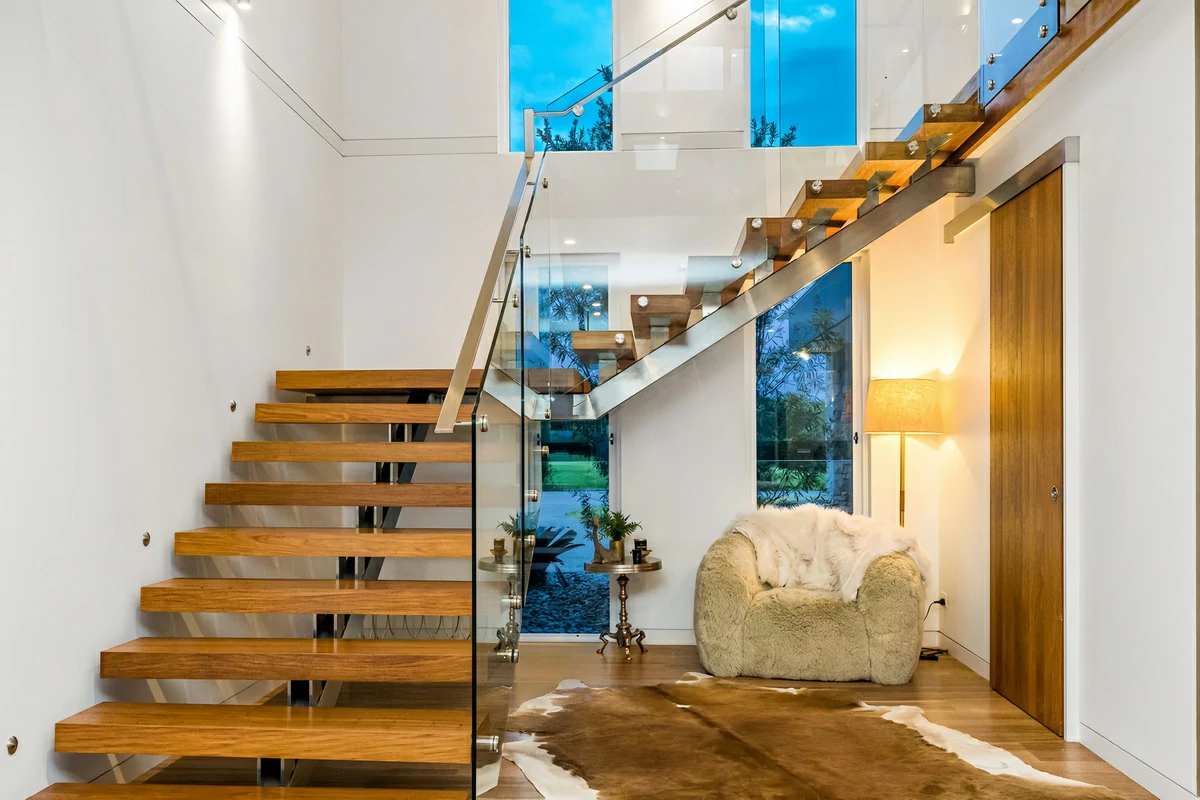
Common Types of Glass Handrail Fittings
Glass railing systems use different hardware configurations depending on how the glass is supported and whether a continuous handrail is required. Understanding the function of each component helps buyers and contractors select the right fittings for their projects.
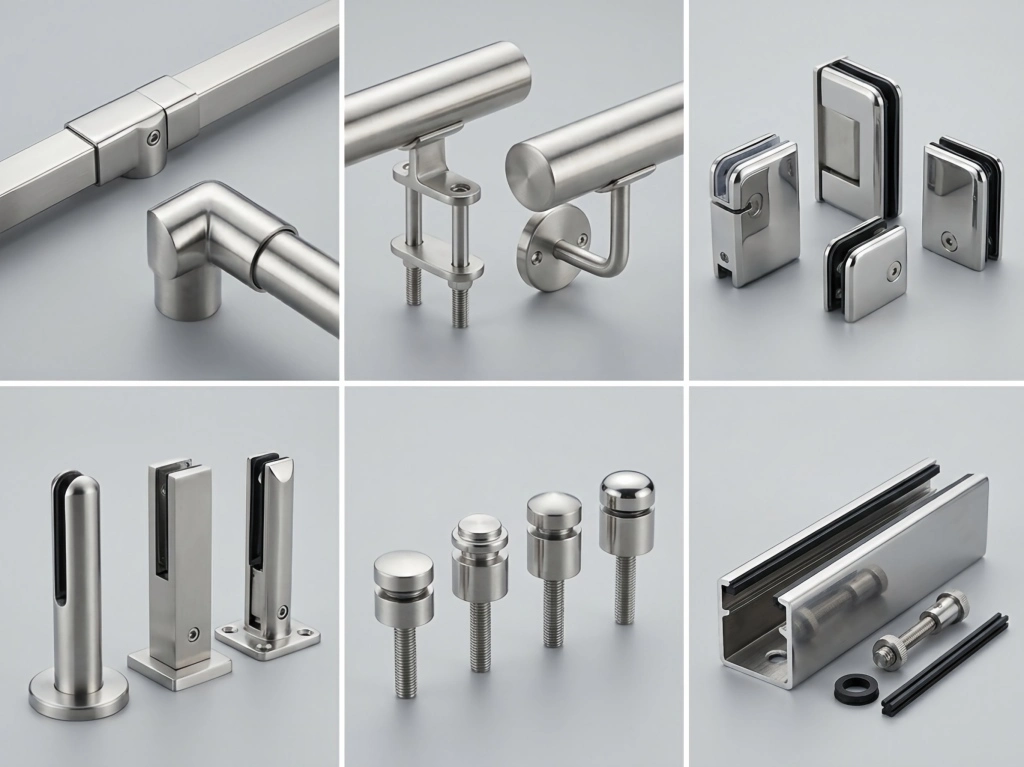
Glass Handrail Connectors
Glass handrail connectors join handrail sections or connect the handrail to other components within a glass railing system. They help maintain a continuous handrail line across straight sections, corners and transitions.
Common configurations include straight inline connectors, fixed corner connectors and adjustable swivel connectors. These fittings are useful for projects involving staircase landings, balcony borders and railing layouts with different angles. When selecting connectors, check the handrail profile, connection dimensions, required angle and compatibility with the surrounding hardware.
Glass Handrail Brackets and Handrail Support Brackets
Glass handrail brackets and handrail support brackets secure and support handrails in glass railing installations. Depending on the system, they connect the handrail to a glass panel, wall or supporting structure.
Stainless steel handrail brackets for glass are available in different shapes and mounting styles for round or square handrails. Common design features include threaded support stems, flat or curved mounting saddles and adjustable joints. These configurations allow the handrail to be positioned at the required height and accommodate sloped staircases or ramps.
When choosing brackets, consider the handrail profile, mounting position, glass thickness and required clearance. The bracket must be compatible with the complete railing assembly rather than selected as an isolated decorative component.
Glass Clamps
Glass clamps are used to secure glass panels to vertical posts, floor bases or wall structures. In many standard configurations, they hold the glass without requiring holes to be drilled through the panels, making them a practical option for modular and semi-frameless railing systems.
Available in different shapes and sizes, glass clamps accommodate specific glass thicknesses and mounting arrangements. Rubber or polymer gaskets are typically installed between the metal fitting and glass to provide cushioning and help prevent direct metal-to-glass contact.
Before ordering, verify the compatible glass thickness, clamp dimensions, fixing method and gasket configuration. The selected clamps must be suitable for the glass construction and design loads of the railing system.
Glass Spigots
Glass spigots are floor-mounted supports designed to secure the lower edge of glass panels in frameless glass balustrade systems. They can be installed using surface-mounted base plates or other specified fixing arrangements, depending on the product design and project requirements.
Unlike conventional post-and-rail systems, glass spigots minimize visible supporting hardware above floor level, allowing the glass panels to remain the main visual feature. They are commonly used around swimming pools, balconies, terraces and staircases.
Spigots are available in square and round designs. Selection should take into account glass thickness, mounting conditions, installation layout and structural requirements. For outdoor and coastal projects, stainless steel grade and surface finish also require careful consideration.
Glass Standoffs
Glass standoffs, also known as point-fix fittings, are cylindrical hardware components used to mount glass panels away from a supporting wall or structural surface. They typically connect through pre-drilled holes in the glass, creating a floating appearance.
These fittings are used in glass balustrades, staircases, balconies, interior partitions and decorative architectural installations. Depending on the design, they may include threaded fixing components and decorative stainless steel covers.
When choosing glass standoffs, check the glass thickness, panel dimensions, fixing-point layout, substrate material and required stand-off distance. The supporting structure must also be capable of accommodating the specified fixing loads.
Structural Connectors
Structural connectors join major components of a glass railing system and help transfer loads between connected elements. Examples include glass-to-glass stabilization brackets, corner connectors, wall flanges and other engineered fixing components.
These fittings are particularly important at corners, transitions and locations where adjacent glass panels need additional connection or stabilization. Their dimensions, material, fixing method and compatibility with surrounding components must be considered as part of the complete railing design.
For projects with unusual panel arrangements or specific architectural requirements, customized structural connectors may be necessary.
Top Slot Tubes & Cap Rails
Top slot tubes and cap rails are installed along the upper edge of glass panels to provide a finished top profile and, where required, support a continuous handrail arrangement.
A top slot tube typically features an internal channel that accommodates the glass edge, often with compatible gaskets or inserts. Cap rails provide a finished upper edge and help create a continuous visual line across multiple panels.
These components are commonly used in glass railing systems that combine glass infill panels with stainless steel top rails. Their internal profiles and dimensions must match the specified glass thickness and installation method.
Base Channels & U-Profiles
Base channels and U-profiles secure glass panels along their lower edges. They are frequently used in frameless glass balustrade systems, where glass is supported by a continuous channel instead of individual posts or visible spigots.
The channel is fixed to a suitable structural substrate, while compatible gaskets, inserts and adjustment components hold the glass in position. Because much of the supporting hardware can be concealed, this arrangement creates a clean and relatively uninterrupted appearance.
When selecting base channels, check glass thickness, channel dimensions, anchoring arrangements, drainage requirements for outdoor installations and the structural capacity of the supporting surface. The channel and its associated components should be specified as a complete system.
Materials and Finishes for Glass Handrail Fittings
Material selection affects the durability, corrosion resistance, appearance and maintenance requirements of glass handrail fittings. Stainless steel is widely used in architectural railing hardware because it combines mechanical strength with different levels of corrosion resistance and a range of surface finishes.
The appropriate specification depends on the installation environment, exposure to moisture or chlorides, project requirements and maintenance conditions.
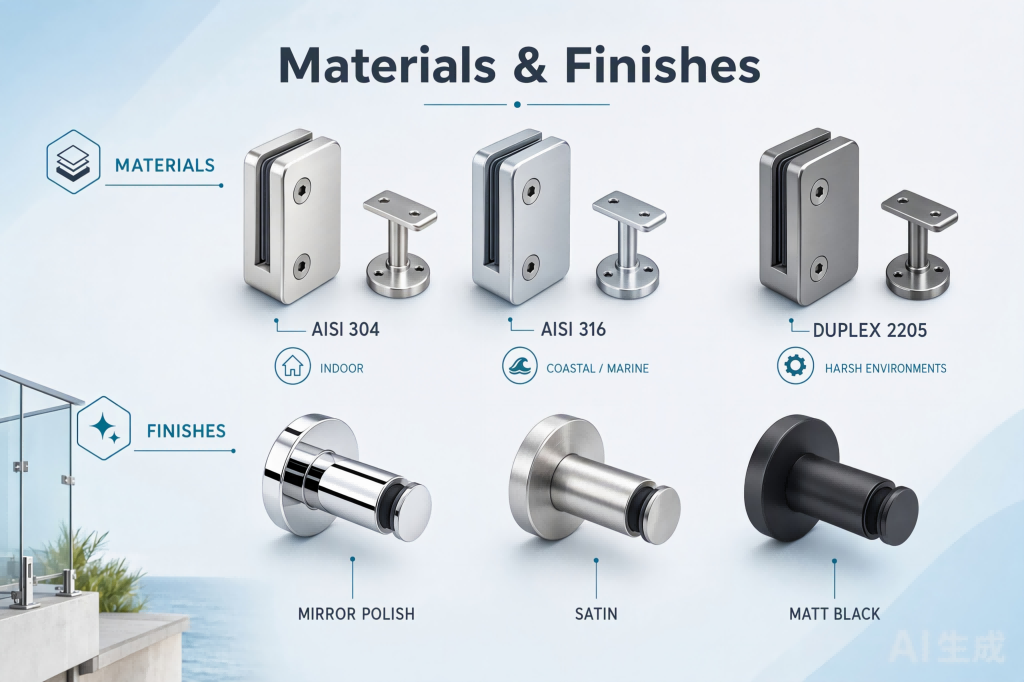
AISI 304 Stainless Steel
AISI 304 stainless steel is commonly used for indoor glass handrail fittings and general architectural hardware. It provides good corrosion resistance in many normal indoor environments and is suitable for applications such as interior staircases, office buildings, shopping centers and residential railing systems.
Its versatility and availability make it a practical option where exposure to saltwater and aggressive environmental conditions is limited. However, AISI 304 may be less suitable for coastal or chloride-rich environments, so actual exposure conditions should be evaluated before specification.
AISI 316 & Duplex SS 2205
AISI 316 stainless steel contains molybdenum, which improves its resistance to chloride-related corrosion compared with AISI 304. It is frequently selected for outdoor glass handrail fittings, coastal buildings and marine environments where exposure to moisture and salt is a concern.
Duplex stainless steel 2205 offers higher strength than conventional 304 and 316 grades, together with strong resistance to localized corrosion. It may be considered for demanding marine or industrial environments where its mechanical and corrosion-resistance properties justify the selection.
The choice between 316 and Duplex 2205 should be based on environmental exposure, design requirements, fabrication considerations and budget. Buyers should also confirm material specifications and component compatibility when sourcing stainless steel glass fittings.
Surface Finishes
Surface finish influences the appearance and maintenance requirements of glass handrail fittings. Common options include:
- Mirror Polish: A highly reflective finish that creates a clean, modern appearance and is frequently used in premium residential, commercial and hospitality projects.
- Satin Finish: A brushed appearance with softer reflection, suitable for contemporary architectural railing systems.
- Matt Black: A dark, low-gloss finish that creates contrast with clear glass and complements modern interior and exterior designs.
The selected finish should coordinate with other railing components, including handrails, posts, brackets and base fittings. For outdoor installations, appropriate cleaning and maintenance are also important for preserving the surface condition.
How to Select Fittings for Frameless Glass Railings
Selecting fittings for frameless glass railings requires consideration of glass specifications, connection methods, environmental conditions and applicable safety requirements. A fitting that looks suitable may not be compatible with the glass or supporting structure, so selection should begin with the technical requirements of the complete railing system.
Check Glass Thickness and Compatibility
Glass thickness is one of the first specifications to confirm. Different clamps, spigots, connectors and base channels are designed for particular glass thickness ranges, and their dimensions must match the panels used in the project.
Buyers should also confirm whether the system uses monolithic tempered glass, laminated glass or another specified glass construction. These types have different structural characteristics, so the selected fittings must be approved or engineered for the intended configuration.
Always verify the manufacturer's compatibility information before ordering rather than assuming that fittings designed for one glass thickness or construction can be used with another.
Choose the Right Handrail Support and Connection Type
The connection method determines how glass panels, handrails and supporting structures work together. Common configurations include post-mounted glass panels with clamps, frameless panels supported by spigots, glass fixed through standoffs and panels secured in continuous base channels.
If the project requires a continuous stainless steel handrail, suitable glass handrail connectors and support brackets should match the handrail profile and connection arrangement. For systems without a conventional top rail, the glass support and edge configuration must meet the applicable design requirements.
The final choice should reflect the architectural layout, installation conditions, required support arrangement and overall system performance.
Consider Indoor and Outdoor Conditions
Indoor and outdoor installations may require different material specifications and maintenance considerations. Interior systems in relatively dry environments may use AISI 304 stainless steel, while outdoor and coastal projects often require AISI 316 because of its improved resistance to chloride exposure.
For more aggressive environments, Duplex SS 2205 may be considered where its higher strength and corrosion-resistance properties are appropriate. The final grade should be selected according to actual exposure conditions rather than relying solely on a general indoor-versus-outdoor distinction.
Also consider water accumulation, drainage, cleaning access and contact with other materials, as these factors can influence the long-term condition of stainless steel glass fittings.
Verify Safety and Applicable Building Requirements
Glass railing systems are safety-related building components, so fitting selection must consider more than appearance and material grade. The complete assembly—including glass panels, connectors, brackets, spigots, channels, anchors and supporting structures—must be suitable for the required loads and installation conditions.
Before specifying or installing fittings, verify applicable local building codes, guard and handrail requirements, glass safety standards, design loads and installation instructions. Requirements may differ according to building type, location and intended use.
For commercial, public-access and elevated installations, project-specific engineering review may be necessary. Buyers and contractors should obtain relevant technical data and installation guidance from the system supplier.
Common Applications of Glass Handrail Fittings
Glass handrail fittings are used in residential, commercial and outdoor architectural projects where transparency and an open appearance are important.
- Residential Buildings: Clamps, brackets, spigots and connectors are used in staircases, balconies, terraces and internal mezzanines, complementing modern residential architecture.
- Commercial Buildings: Shopping centers, offices, hotels and mixed-use developments incorporate glass handrails in staircases, corridors, balconies and atriums. These projects often require coordinated hardware specifications and consistent finishes.
- Outdoor Balconies and Terraces: Frameless glass balustrade fittings preserve visibility while providing a defined railing boundary. Material grade and installation design should account for weather exposure and project-specific loads.
- Swimming Pools and Leisure Facilities: Glass spigots and other frameless railing fittings can be used around pools and recreational areas. Selection should consider moisture, cleaning chemicals, potential chloride exposure and applicable safety requirements.
- Staircases and Public Spaces: Glass panels combined with stainless steel handrails provide visual openness while maintaining practical handrail support in residential and commercial buildings.
Across these applications, the right combination of glass thickness, fitting design, stainless steel grade and mounting method helps the railing system meet its functional and architectural requirements.
Choosing a Reliable Glass Handrail Fittings Supplier
Selecting a reliable supplier is important for projects that require consistent dimensions, material quality and compatibility across multiple components. Buyers should evaluate not only the product range but also the supplier's manufacturing capabilities and technical support.
Material and Manufacturing Quality: Confirm the stainless steel grade and ask whether material documentation is available. Manufacturing processes, dimensional control and surface finishing should be suitable for the intended application.
Product Range and Compatibility: A supplier offering glass handrail connectors, brackets, clamps, spigots and other fittings can make it easier to source compatible components for a complete railing project.
Customization and Engineering Support: Standard products may not meet every project requirement. Custom dimensions, mounting configurations, connection details and finish options can be important for specific glass panels and architectural layouts.
Quality Inspection: Dimensional accuracy and surface quality are essential for stainless steel glass fittings. Ask about inspection procedures and the supplier's ability to maintain consistency across repeat orders.
At Highco Metal, our capabilities include stainless steel casting, precision machining and customized metal component manufacturing. We work with 304, 316 and Duplex 2205 stainless steel, with surface finish options including satin, mirror polish and matt black. Our manufacturing capabilities support custom hardware requirements, design optimization, rapid prototyping and inspection for architectural and industrial applications.
Whether you are sourcing standard glass handrail fittings or developing customized stainless steel components, working with a manufacturer that understands material selection, machining requirements and product consistency can support your project from specification to production.
Conclusion
Glass handrail fittings are essential components in modern glass railing systems, connecting and supporting glass panels, handrails and structural elements. From glass clamps and spigots to handrail brackets, standoffs and base channels, each fitting serves a specific function within the overall assembly.
When selecting fittings for frameless glass railings, consider glass thickness, connection type, stainless steel grade, surface finish, installation conditions and applicable building requirements. Choosing compatible components and a capable supplier helps achieve a railing system that meets both functional and architectural expectations.
Highco Metal provides stainless steel hardware manufacturing and customized component solutions for glass railing and handrail applications. Contact Highco Metal to discuss your glass handrail fittings requirements, request product information or inquire about customized stainless steel components for your next project.