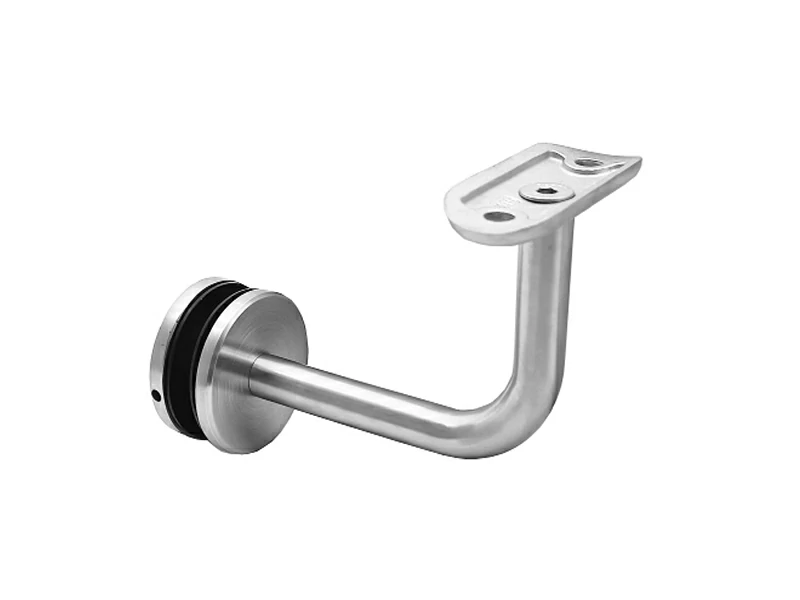
Stainless steel handrails are widely used in residential, commercial, and industrial projects because they combine durability, corrosion resistance, and a clean architectural appearance. From staircases and balconies to public walkways and outdoor platforms, a well-designed stainless steel handrail system provides practical support while complementing the surrounding structure.
Choosing the right system requires more than selecting a material. The installation environment, stainless steel grade, tube profile, mounting method, surface finish, and component compatibility all affect long-term performance. This guide covers the main types and applications of stainless steel handrails, key design considerations, and how to select a suitable solution for your project.

What Is a Stainless Steel Handrail?
A stainless steel handrail is a support surface installed along stairs, ramps, corridors, and other areas where people need assistance with balance and movement. It may be mounted directly to a wall or supported by posts as part of a larger railing system.
A typical stainless steel handrail system includes handrail tubes, brackets, posts, connectors, elbows, end caps, and mounting bases. Some designs also incorporate glass panels to create a more open architectural appearance.
Stainless steel is valued for its mechanical durability, corrosion resistance, and design flexibility. Grade 304 is commonly used in many indoor and general-purpose applications, while grade 316 may be more suitable for environments with greater chloride exposure. The appropriate choice depends on the actual service conditions and project specifications.
A handrail should also be distinguished from a guardrail. A handrail provides a surface to grip, whereas a guardrail acts as a protective barrier along elevated edges. Depending on the application and local building codes, a railing system may incorporate both functions.
Types of Stainless Steel Handrails
Stainless steel handrails are available in different configurations to accommodate the building layout, installation surface, and functional requirements.
Wall-Mounted Stainless Steel Handrails
Wall-mounted handrails are secured to a suitable structural wall using brackets or supports, making them practical for stairways, corridors, and ramps where clear floor space is important. Their streamlined appearance suits both residential interiors and commercial buildings.
Design considerations include handrail height, wall clearance, bracket spacing, and the strength of the mounting substrate. These details should be coordinated with the intended use and applicable accessibility and building requirements.
Post-Mounted Stainless Steel Handrails
Post-mounted handrails use vertical supports anchored to a suitable floor, deck, stair structure, or base. They are commonly installed on open staircases, balconies, terraces, platforms, and walkways where direct wall mounting is impractical.
The posts, handrail tubes, mounting bases, and connections must work together to provide the required structural performance. Post spacing and anchoring should therefore be determined according to the system design and project requirements.
Glass and Stainless Steel Handrail Systems
Glass and stainless steel handrail systems combine glass panels with stainless steel posts, clamps, spigots, brackets, or handrail profiles. They are popular in contemporary residential and commercial architecture because they preserve sightlines while providing a defined railing structure.
The appropriate configuration depends on the glass specification, mounting method, structural requirements, and intended application. Component compatibility and installation quality are particularly important when glass forms part of the system.
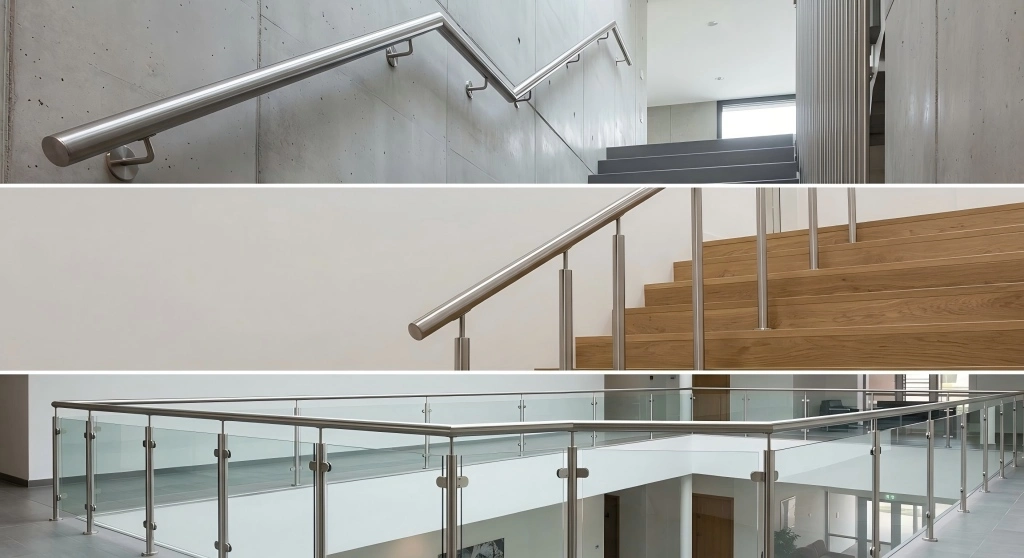
Stainless Steel Handrail Applications
Indoor Architectural Systems
Indoor stainless steel handrails are widely used in homes, offices, hotels, shopping centers, and public buildings. They complement materials such as wood, tile, stone, and concrete, making them suitable for both traditional and contemporary interiors.
Brushed or satin finishes offer a restrained appearance, while mirror-polished surfaces provide a more reflective decorative effect. Round tubes are commonly selected for comfortable gripping, whereas square and rectangular profiles can suit more geometric architectural designs.
Outdoor and Environmental Applications
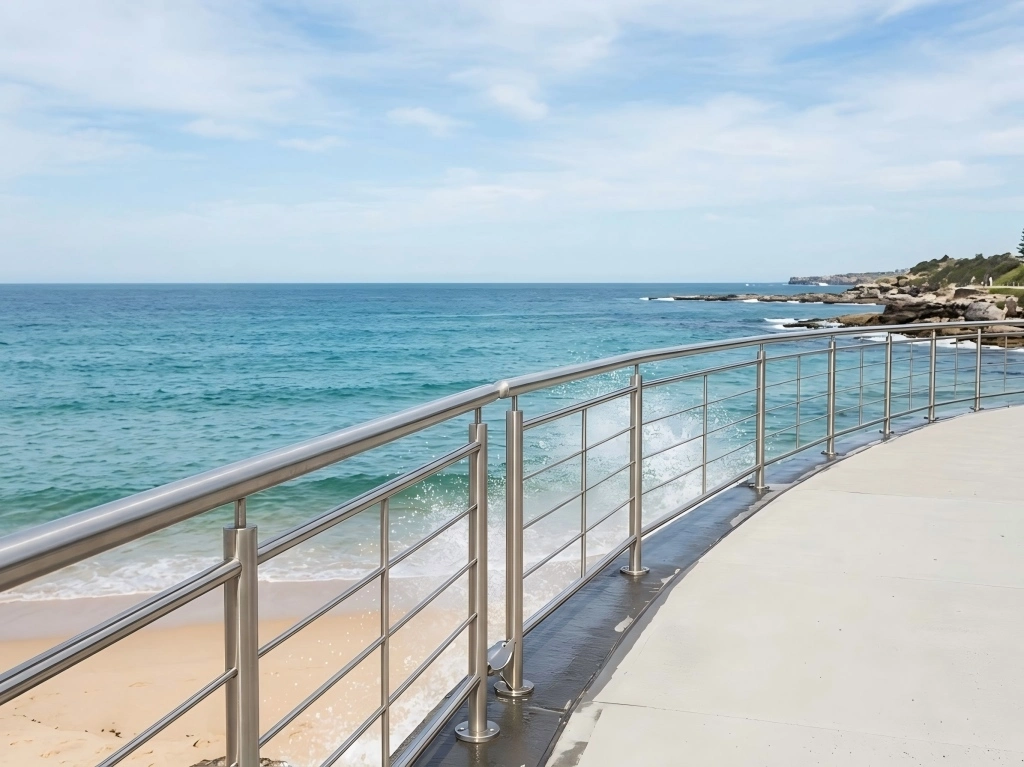
A stainless steel outdoor handrail may be installed on exterior stairs, balconies, decks, ramps, pool areas, and exposed walkways. These applications require careful material selection because moisture, airborne salt, industrial pollutants, and cleaning chemicals can affect corrosion resistance and surface condition.
Grade 316 may be appropriate for many chloride-exposed environments, although severe marine or industrial conditions may require a more detailed material assessment. Drainage, surface contamination, maintenance access, and connection durability should also be considered during design.
Commercial and High-Traffic Settings
Commercial buildings, hospitals, schools, transportation facilities, and public infrastructure often require handrails that can withstand frequent use and routine cleaning while maintaining a consistent appearance.
For these environments, material grade is only one part of the decision. Structural support, anchoring, connection quality, finish, and ease of inspection should also be evaluated to ensure the system meets its intended performance requirements.
Stainless Steel Handrail Design Considerations
Effective stainless steel handrail design balances user comfort, structural performance, environmental exposure, and architectural appearance. The following factors should be evaluated together rather than treated as separate purchasing decisions.
Material Grade
Three stainless steel grades may be considered for different handrail applications:
- 304 stainless steel: Commonly used for indoor architectural systems and many general-purpose environments.
- 316 stainless steel: Contains molybdenum, which improves resistance to chloride-related corrosion and makes it a common option for more demanding outdoor environments.
- Duplex 2205 stainless steel: Offers higher strength and strong resistance to localized corrosion, making it worth evaluating for demanding marine or industrial applications where its properties justify the additional cost.
No single grade is ideal for every project. Selection should account for exposure conditions, fabrication requirements, maintenance expectations, and project specifications.
Handrail Shape and Tube Size
Round, square, and rectangular tubes offer different combinations of grip comfort and architectural style. Round profiles are common in stair and access applications, while square and rectangular sections often complement modern designs.
Tube diameter, wall thickness, support spacing, and overall span should be evaluated according to the intended loads and system configuration. Dimensions should be verified against the applicable design requirements rather than selected on appearance alone.
Handrail Height and Clearance
Handrail height and clearance affect accessibility, usability, and safety. The required dimensions vary by application and jurisdiction, so designers should confirm local building and accessibility codes before finalizing the layout.
Adequate clearance from walls and adjacent surfaces is also necessary to allow users to grip the handrail comfortably.
Connection and Mounting Method
Wall brackets, posts, tube connectors, elbows, and mounting bases must be compatible with the selected tube dimensions, material grade, finish, and installation conditions. The mounting substrate and anchoring method are equally important because they influence the stability of the complete assembly.
Coordinating these details during the design stage can reduce installation difficulties and help maintain a consistent finished appearance.
Surface Finish
Brushed, satin, and mirror-polished finishes are common choices for stainless steel handrails. Brushed finishes create a subtle architectural appearance, while polished finishes offer greater reflectivity.
The decision should account for the surrounding design, visibility of handling marks, cleaning practices, and environmental exposure. Appropriate maintenance remains necessary regardless of the finish selected.
Stainless Steel Handrail System Components
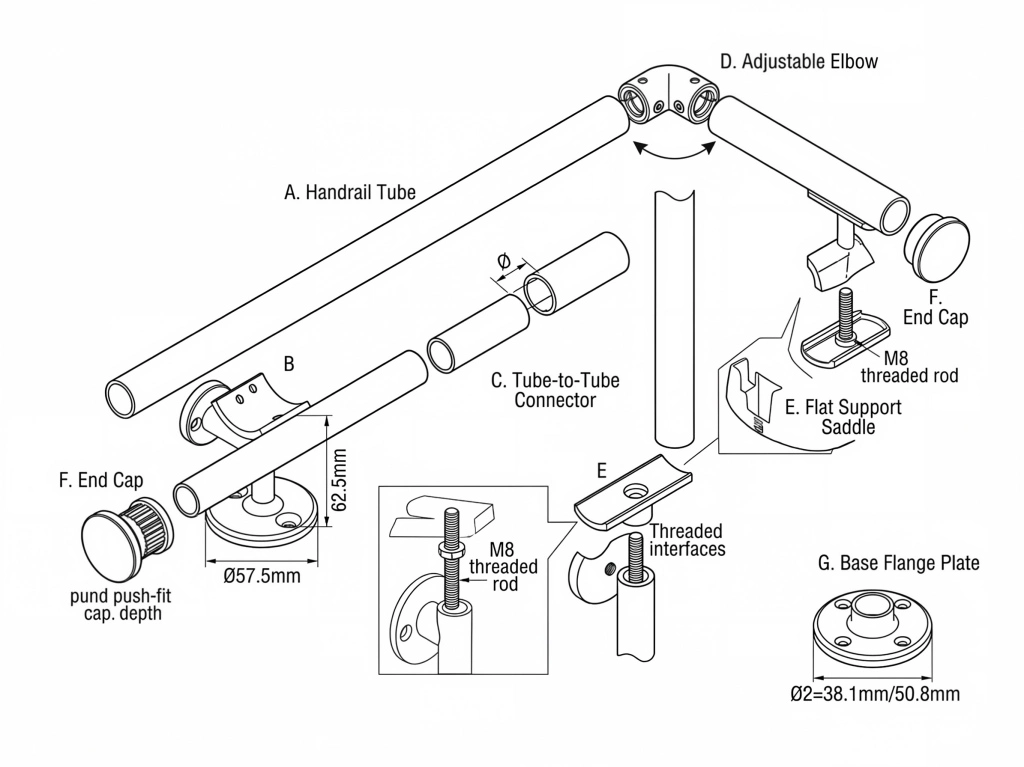
A complete stainless steel handrail system relies on compatible components to connect, support, and finish the assembly. Depending on the design, these may include:
- Handrail tubes and supports: Form the gripping surface and provide structural support.
- Brackets and saddles: Secure wall-mounted handrails or connect the rail to supporting posts.
- Connectors and joiners: Join tube sections or accommodate changes in configuration.
- Elbows and corner fittings: Allow the handrail to change direction.
- End caps and base flanges: Finish exposed tube ends or provide mounting interfaces for supporting posts.
- Glass clamps and spigots: Connect or support glass elements in compatible railing systems.
Selecting suitable Stainless Steel Handrail fittings requires attention to tube dimensions, material grade, surface finish, mounting method, and environmental conditions. These components should be specified as part of the complete system rather than selected independently.
For component options and project-specific requirements, explore Highco Metal's stainless steel handrail fittings.
How to Choose a Stainless Steel Handrail
A systematic selection process helps align the handrail design with the project's functional, environmental, and aesthetic requirements.
1. Define the Application
Identify whether the handrail will serve a staircase, ramp, balcony, walkway, deck, or indoor corridor. Residential, commercial, industrial, and public applications may have different requirements for use, durability, and compliance.
2. Evaluate the Environment
Assess exposure to moisture, salt, chemicals, pollution, and temperature changes. Coastal and industrial environments may require greater corrosion resistance and more frequent cleaning than protected indoor locations.
3. Select the Stainless Steel Grade
Compare the service environment with the properties of grades 304, 316, and, where appropriate, Duplex 2205. Confirm that the selected grade meets the project specification and expected operating conditions.
4. Choose the Handrail Configuration
Determine whether a wall-mounted, post-mounted, or glass-integrated system best suits the structure. The available mounting surfaces, architectural layout, and intended use should guide the decision.
5. Specify the Tube Profile and Finish
Select round, square, or rectangular tubing according to grip requirements and design preferences, then confirm dimensions and surface finish. These choices should remain compatible with the required structural performance and installation method.
6. Match the Fittings and Connections
Confirm that brackets, connectors, elbows, end caps, and mounting bases fit the selected tubes and work with the chosen system configuration. For customized projects, verify dimensional requirements, material compatibility, and finish consistency before production or installation.
Stainless Steel Handrail Installation and Maintenance
Installation Considerations
Before installation, verify measurements, mounting locations, structural support, component compatibility, and required clearances. Staircases, corners, and transitions require particular attention to alignment and continuity.
Anchoring hardware must suit the substrate and environmental conditions, and all connections should be installed according to the system design. Compliance with applicable building, safety, and accessibility requirements should be confirmed before the handrail is put into service.
Maintenance Considerations
Stainless steel is relatively low maintenance, but it is not maintenance-free. Regular cleaning removes dirt, fingerprints, salt deposits, and other contaminants that may affect the surface.
Outdoor and coastal handrails may require more frequent cleaning, depending on exposure. Use suitable cleaning methods and avoid chemicals or abrasive materials that could damage the finish. Periodic inspection of mounting points, connections, and visible surfaces can help identify issues before they affect system performance.
When Is a Custom Stainless Steel Handrail System Appropriate?
Custom stainless steel handrail systems may be suitable when standard configurations cannot meet a project's dimensions, geometry, finish, or connection requirements. Examples include complex staircases, non-standard tube profiles, specialized mounting arrangements, and designs that integrate glass or other materials.
Customization may also extend to brackets, connectors, mounting bases, and other handrail components. Working with a manufacturer that offers casting, CNC machining, fabrication, and component customization can help coordinate these requirements and maintain consistency across the assembly.
Before proceeding, confirm the required drawings, dimensions, material specifications, surface finish, quantities, and inspection criteria to ensure the proposed solution matches the project requirements.
Conclusion
Stainless steel handrails combine durability, corrosion resistance, and architectural flexibility across a wide range of residential, commercial, and industrial applications. Selecting the right system requires careful consideration of the installation environment, stainless steel grade, tube profile, mounting configuration, surface finish, and component compatibility.
For projects with specialized dimensions or connection requirements, a customized system may provide greater flexibility than a standard configuration. Highco Metal supplies stainless steel railing and handrail components, supported by casting, CNC machining, fabrication, and customization capabilities.
Explore Highco Metal's stainless steel handrail fittings to identify components for your project or contact the team to discuss your specific requirements.