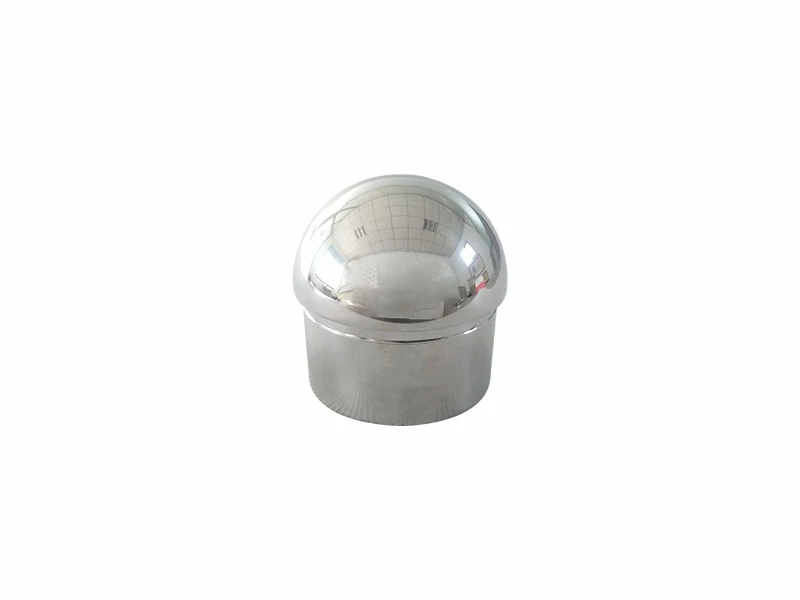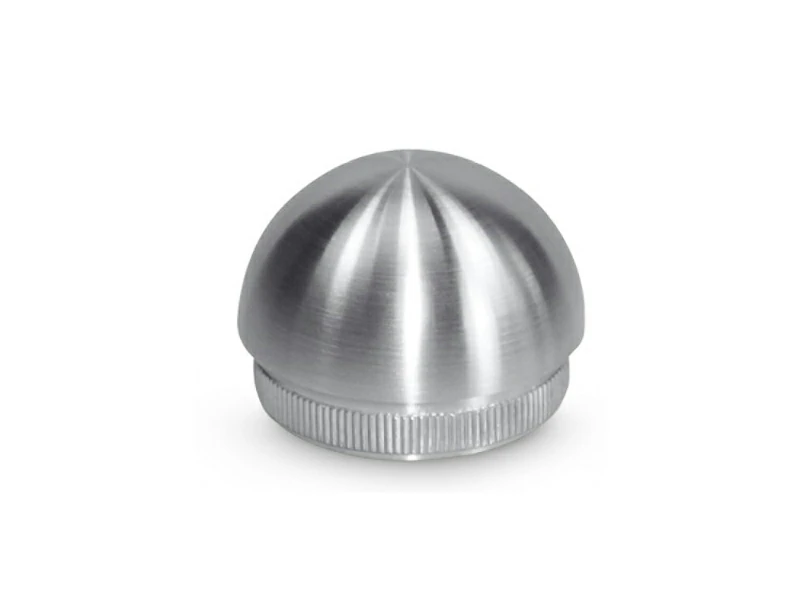
When designing or installing a railing system, safety and aesthetics often come down to the smallest structural details. While tubes, posts, and brackets form the primary framework, handrail end caps provide the essential finishing touch. These small accessories provide a clean finished appearance, improve user safety, and help protect the entire railing system from moisture, dirt, and long-term damage.
Whether you are specifying a commercial balustrade, renovating a residential staircase, or building an outdoor deck, selecting the appropriate railing end caps can significantly enhance durability and elevate the overall design. This comprehensive guide explores the different types, materials, and applications of handrail end caps to help you choose the best solution for your next project.
What Are Handrail End Caps?
Handrail end caps are specialized structural fittings designed to cover and finish the open ends of handrails, tubing, or railing profiles. They are installed at the final termination point of a handrail to create a smooth, attractive appearance while protecting the interior of the tube or rail.
Beyond a purely decorative role, their primary functional benefits include:
- Improved Safety: Unfinished metal or wood railings leave sharp, jagged edges exposed that can cause painful hand cuts or tear clothing. Installing stair handrail end caps covers these hazardous areas, providing a smooth, protective surface for safer everyday use.
- Moisture Protection: For outdoor installations, water entering an open tube can cause severe internal corrosion and structural deterioration over time. Properly fitted outdoor handrail end caps seal the tube tightly and reduce moisture penetration.
- Reduced Maintenance: By preventing dust, dirt, and debris accumulation inside hollow rails, end caps help reduce cleaning requirements and extend the service life of the system.
- Enhanced Appearance: A professionally finished railing framework looks incomplete without appropriate end hardware. They create a polished, high-quality appearance that completes the overall aesthetic of the installation.
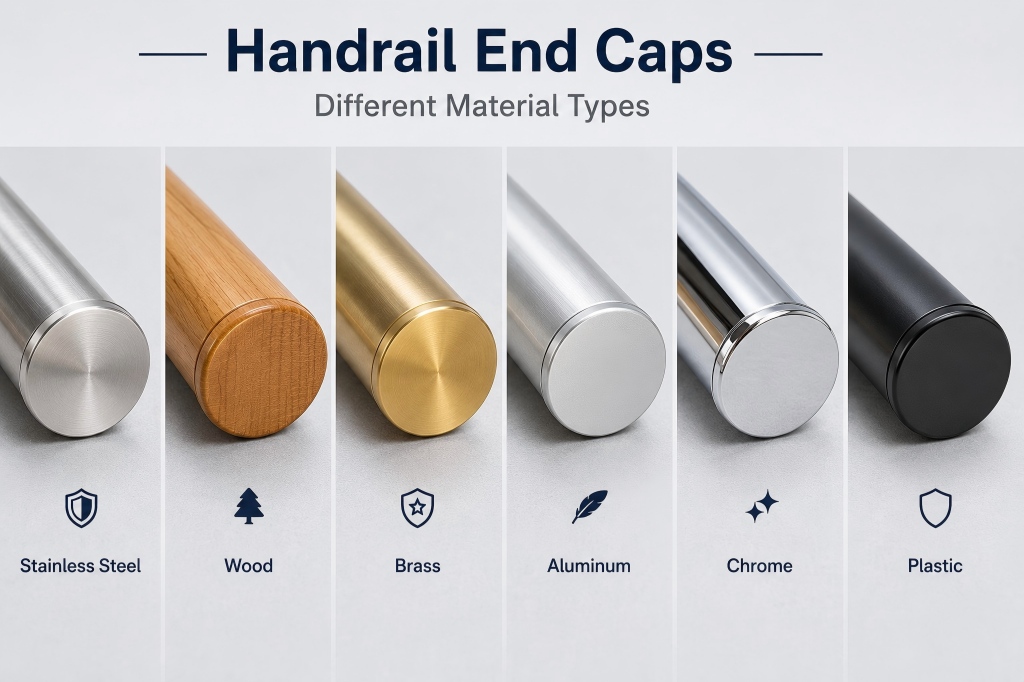
Choosing the Right Material for Your Project
Selecting the proper material for your banister end caps depends entirely on your structural requirements, environmental exposure, and design theme.
1. Stainless Steel Handrail End Caps
For modern architectural designs, Stainless Steel handrail end caps serve as the premium industry standard. Available in Grade 304 for interior layouts and Grade 316 for high-moisture or coastal environments, stainless steel offers unmatched durability. They provide excellent resistance to rust and scratches, and are typically finished in brushed satin or mirror-polished variants to seamlessly match modular tubing.
2. Wooden Handrail End Caps
Ideal for traditional or transitional interiors, wooden handrail end caps blend into timber balustrades seamlessly. They are often crafted from high-quality hardwoods like oak, maple, or walnut, allowing installers to easily stain or paint them to match the exact grain of the banister.
3. Brass Handrail End Caps
For a touch of luxury, classic elegance, or historic restoration, brass handrail end caps offer a striking visual accent. Brass naturally develops a beautiful patina over time, or it can be polished regularly to maintain its bright, golden-toned luster in high-end hotels, restaurants, and luxury residential homes.
4. Aluminum Handrail End Caps
If weight constraints and cost-efficiency are your primary project considerations, aluminum handrail end caps provide a highly lightweight yet structurally sound alternative. They are exceptionally versatile, easily powder-coated to match colored railing frameworks, and inherently resistant to corrosion.
5. Plastic Handrail End Caps
Mainly utilized in industrial manufacturing facilities, warehouses, or budget-conscious commercial spaces, plastic handrail end caps offer a practical, low-cost solution. They are remarkably quick to install, absorb impacts well, and are completely immune to environmental moisture.
Application Environments: Indoor vs. Outdoor
Where you install your railing system dictates the level of environmental defense your hardware requires.
- Outdoor Handrail End Caps: Exterior railings face relentless, ongoing exposure to rain, UV rays, and temperature fluctuations. For these projects, heavy-duty metal handrail end caps made from marine-grade Grade 316 stainless steel or anodized aluminum are mandatory to prevent oxidation, pitting, and rust.
- Indoor Handrail End Caps: Interior environments allow for much greater decorative freedom because applications prioritize aesthetics, finish quality, and design integration. Designers can confidently utilize indoor handrail end caps made of Grade 304 stainless steel, brass, rich hardwoods, or bright chrome handrail ends to create high-contrast focal points without worrying about severe weather wear.
Structural Types & Installation Styles
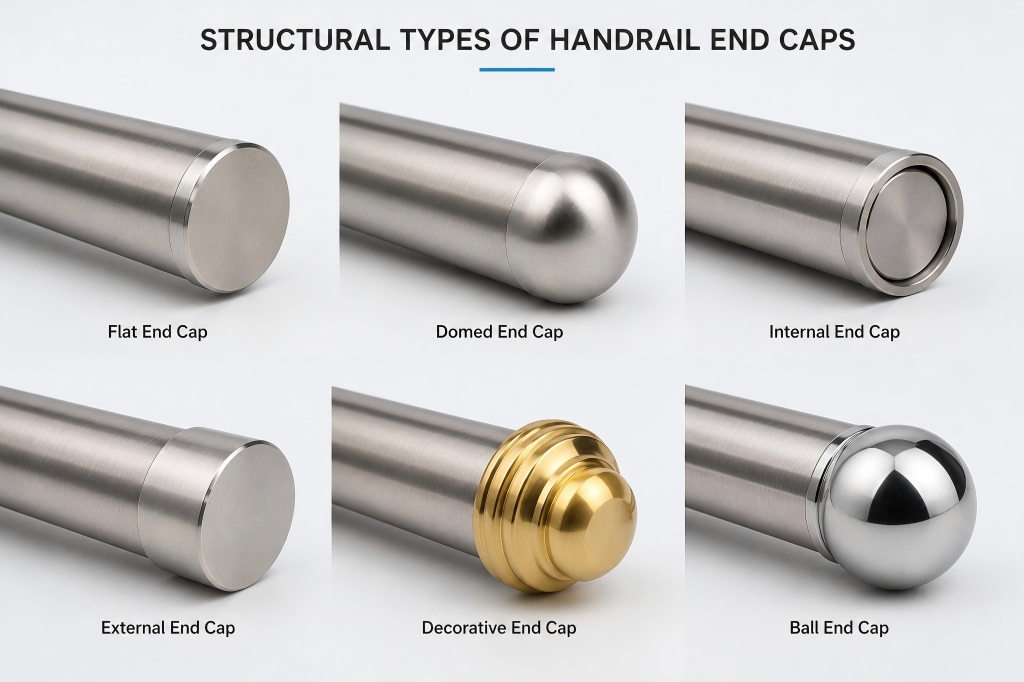
When browsing commercial product catalogs, you will generally encounter different structural shapes and installation configurations:
Flat End Caps vs. Domed End Caps
- Flush / Flat End Caps: These flat inserts sit completely level with the cut edge of the tube, creating a crisp, minimalist, and geometric finish. They are ideal for modern architecture, glass railings, and contemporary commercial projects.
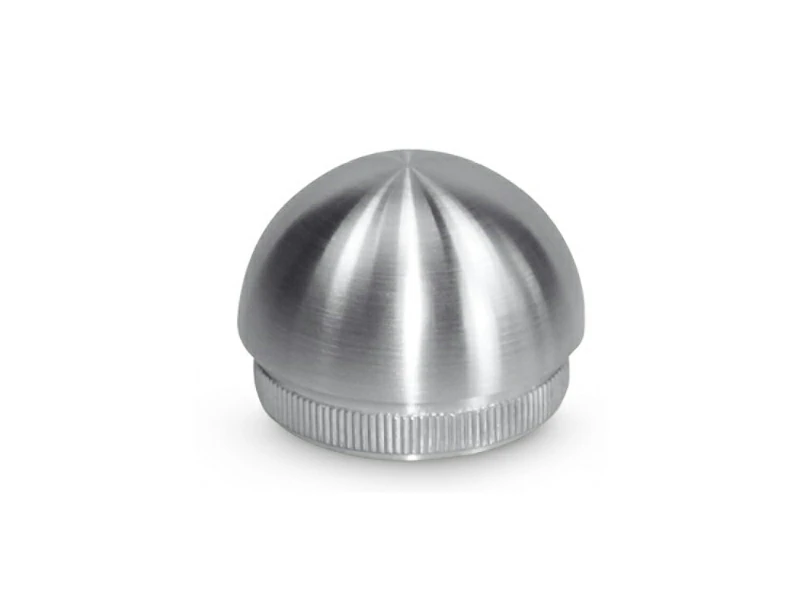
- Domed or Semi-Spherical End Caps: Domed caps feature a rounded, curved surface that softens the termination point of the rail. This shape provides a highly tactile, ergonomic transition that is comfortable for public handrails and residential staircases.
Internal vs. External Formats
- Internal End Caps: These fit inside the open tube to create a hidden installation, a clean profile, and a nearly seamless modern aesthetic.
- External End Caps: These fit directly over the outside edge of the rail. They offer simple installation, strong perimeter protection, and a highly cost-effective solution.
Most modern metal fittings utilize a simple, weld-free internal push-fit design. They feature ribbed driving sleeves that slide tightly inside the tube and are permanently secured using a high-strength structural adhesive or a hidden grub screw—completely eliminating the need for complex, time-consuming on-site welding.
Summary Guide for Selection
To ensure secure installation and professional results, always follow these core criteria:
- 1. Match the Material: Align your end cap material with your handrail material whenever possible (e.g., stainless steel rails pair best with stainless steel caps).
- 2. Evaluate the Environment: Specify corrosion-resistant marine alloys like Grade 316 stainless steel for marine or high-exposure outdoor settings.
- 3. Complement the Style: Choose minimalist internal profiles for modern layouts and elegant brass or decorative wooden finishes for traditional designs.
- 4. Verify Tube Dimensions: Always confirm the exact tube diameter, tube shape, and wall thickness before purchasing to guarantee a flawless fit.
Final Thoughts
Although they are relatively small components, handrail end caps play an important role in the performance and appearance of a railing system. From metal handrail end caps for commercial projects to wooden handrail end caps for traditional interiors, selecting the right material and design can significantly improve durability, safety, and visual appeal.
Whether you are specifying outdoor handrail end caps for a coastal balcony or choosing indoor handrail end caps for a staircase renovation, investing in quality end caps helps create a finished railing system that performs well and looks professional for years to come.