When designing or installing a railing system, most attention goes to posts, panels, and handrails. However, the true strength and safety of the system depend on the smallest components: railing fasteners. Choosing the wrong fasteners can lead to corrosion, loosening, structural failure, and long-term safety risks.
Selecting the correct railing screws, railing nuts, washers, and bolts for railing systems is essential for durability, compliance with building codes, and long-term performance. This guide explains the most common railing fasteners and how to choose the right hardware for your specific application.
Why Railing Fasteners Matter
Railing systems are constantly exposed to:
- Vertical and lateral loads
- Vibration from foot traffic
- Environmental stress such as moisture, temperature changes, and salt air
Railing systems are subject to constant environmental stress, vibration, and weight loads. Poor-quality or mismatched railing fasteners can result in:
- Loose or unstable railings
- Corrosion and surface staining
- Reduced load-bearing capacity
- Premature system failure
High-quality railing fasteners ensure structural integrity, long service life, and reliable safety performance in both residential and commercial installations.
Common Types of Railing Fasteners
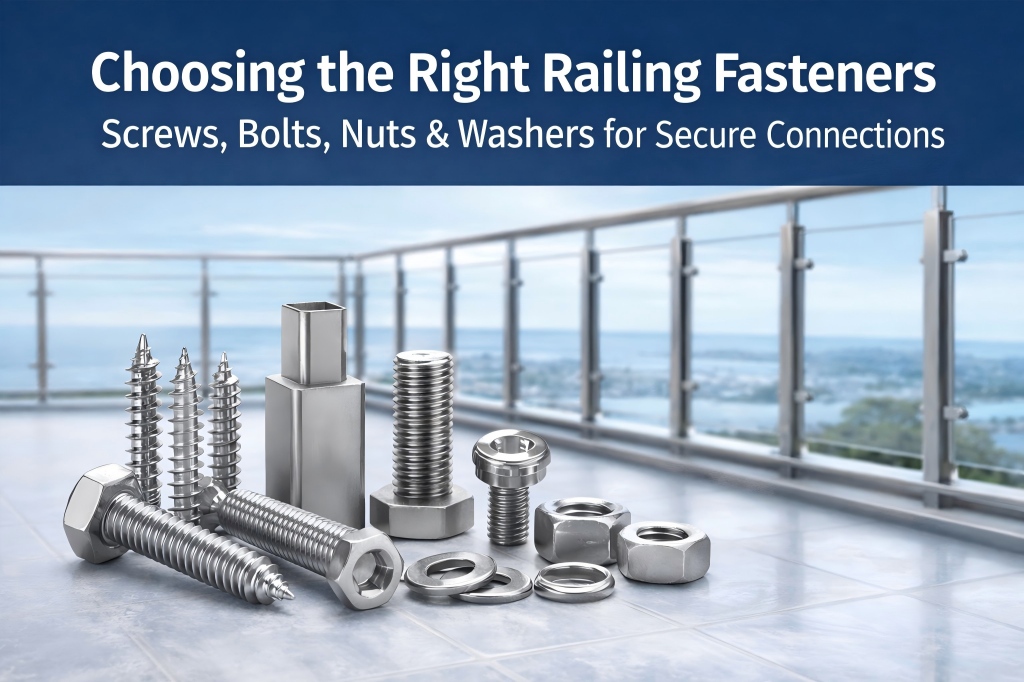
Railing Screws
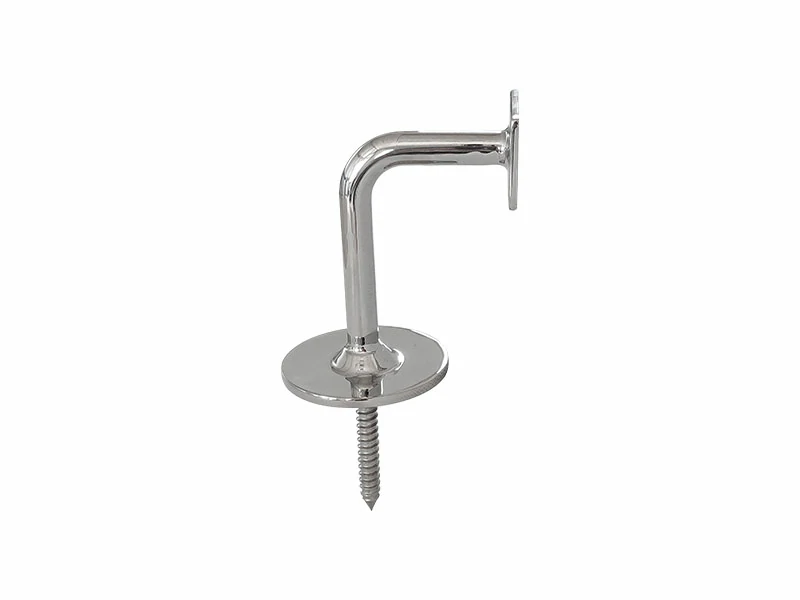
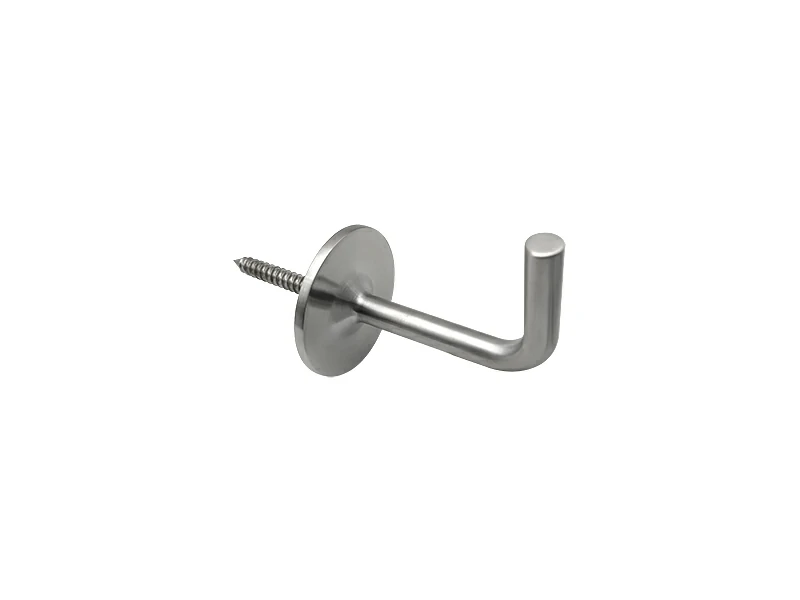
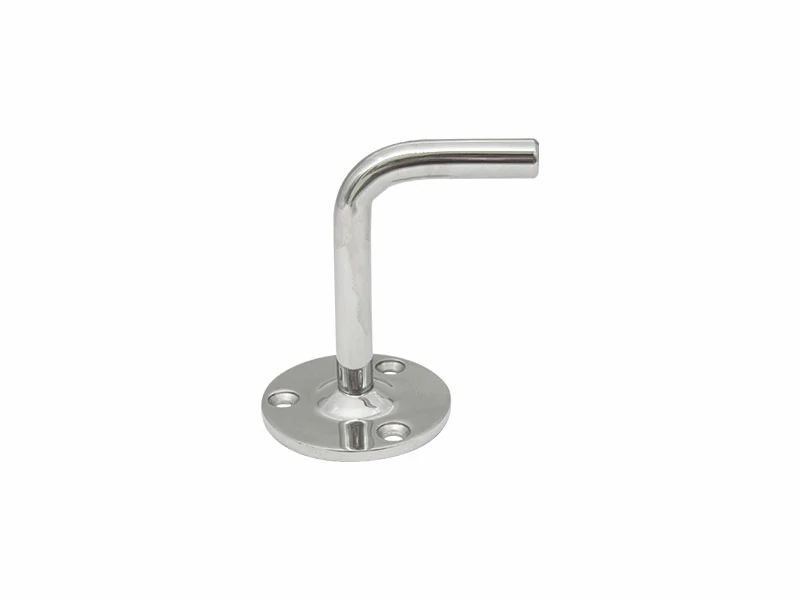
Railing screws are widely used to attach railing components to posts, walls, or substrates.
Common types include:
- Lag screws: Heavy-duty fasteners used to mount base plates to wood decks or blocking
- Self-tapping or self-drilling screws: Ideal for attaching handrail brackets to metal posts without pre-drilling
Key advantages:
Available in stainless steel or coated carbon steel
Suitable for wood, metal, and composite railing systems
Best use: Securing brackets, handrail supports, and base plates.
Bolts for Railing Systems
Bolts for railing systems provide higher strength and are used for structural connections.
Common bolt types:
- Hex bolts: Offer high torque and secure clamping force
- Carriage bolts: Rounded head for a cleaner, public-facing appearance
- Socket head bolts: Used where a compact, flush connection is required
Bolts are typically paired with railing nuts and washers for maximum security.
Best use: Post-to-base connections, metal-to-metal joints, and load-bearing applications.
Railing Nuts
Railing nuts work with bolts to lock components firmly in place.
Common styles:
- Hex nuts
- Lock nuts
- Nylon insert nuts (preferred for vibration resistance)
Locking nuts are especially important in stairways and high-traffic areas where movement and sway are common.
Best use: High-load or high-vibration connections.
Washers
Though small, washers play a critical role in railing fastener performance.
- Flat washers distribute load and protect surfaces
- Spring or lock washers reduce loosening over time
- Essential in glass railing systems to prevent point pressure and glass damage
Best use: Anywhere bolts or screws contact metal, wood, or glass surfaces.
Choosing the Right Material for Railing Fasteners
Stainless Steel Railing Fasteners
Stainless steel is the preferred material for most railing fasteners due to strength and corrosion resistance.
- Grade 304 stainless steel: Suitable for indoor or low-humidity environments
- Grade 316 stainless steel: Recommended for outdoor, coastal, or marine environments
Best choice for: Glass railings, exterior balconies, architectural railing systems.
Carbon Steel Fasteners (Coated)
Carbon steel fasteners may be used in cost-sensitive applications but require protective coatings.
- Zinc-plated or powder-coated
- Lower corrosion resistance than stainless steel
Best choice for: Indoor or temporary railing installations.
How to Select the Right Railing Fasteners
When choosing railing fasteners, consider:
- Installation environment (indoor vs outdoor)
- Load and safety requirements
- Railing material (glass, metal, wood)
- Mounting surface (concrete, wood, steel)
- Local building codes and inspection standards
Fasteners by Substrate
- Concrete: Expansion anchors or chemical anchors
- Wood: Stainless steel lag bolts into structural blocking
- Metal: Machine bolts with nuts and washers, or high-quality self-tapping screws
For most modern systems, stainless steel railing screws, nuts, washers, and bolts offer the best balance of strength, corrosion resistance, and appearance.
Installation Tips for Railing Fasteners
- Match fastener material to railing material
- Always pre-drill holes, especially in wood and stainless steel
- Use washers to distribute load evenly
- Avoid mixing stainless steel with carbon steel to prevent galvanic corrosion
- Tighten fasteners to recommended torque values
- Recheck fasteners after installation, especially in outdoor environments
Conclusion
A railing system is only as strong as its anchor points. Using the correct railing fasteners ensures long-term safety, stability, and visual quality. Investing in high-quality stainless steel fasteners reduces maintenance, improves compliance, and protects your railing system for years to come. For professional results, always opt for 304 or 316-grade stainless steel hardware.